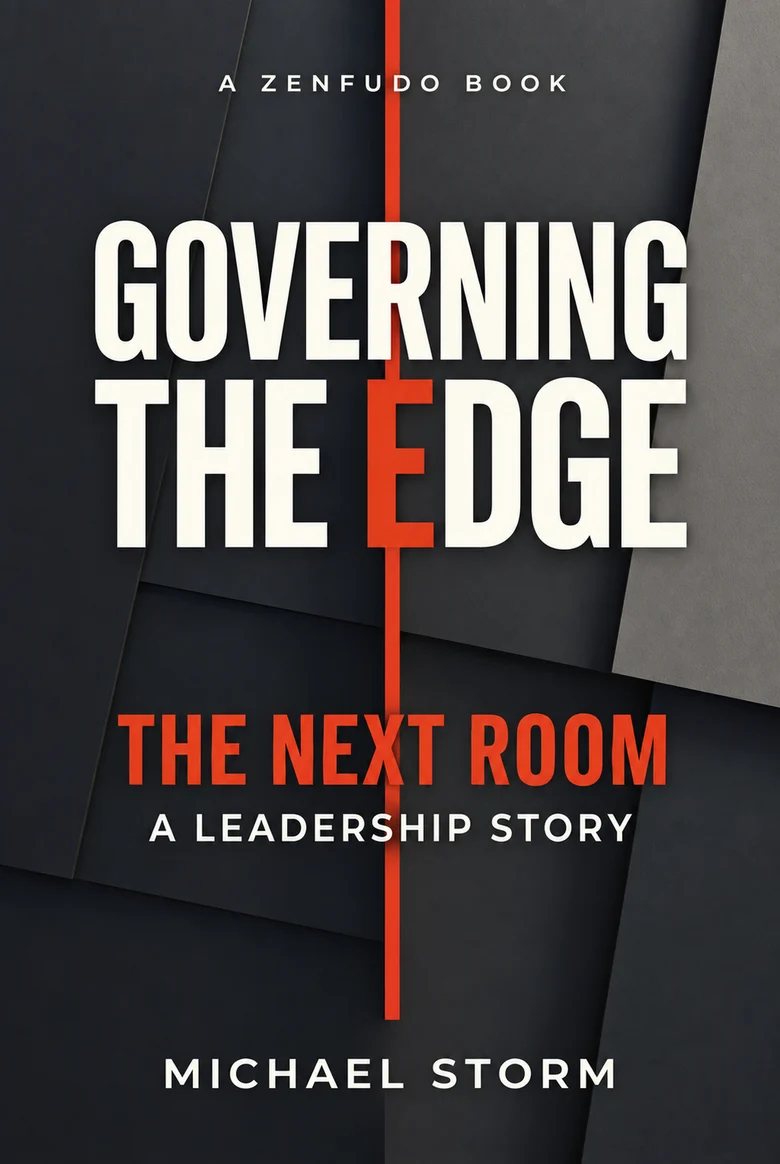
Book One · September 29, 2026
The Next Room
What happens when capable people lose trust at work and closeness at home without seeing the choices behind it? A leadership story you can learn from.
Explore The Next Room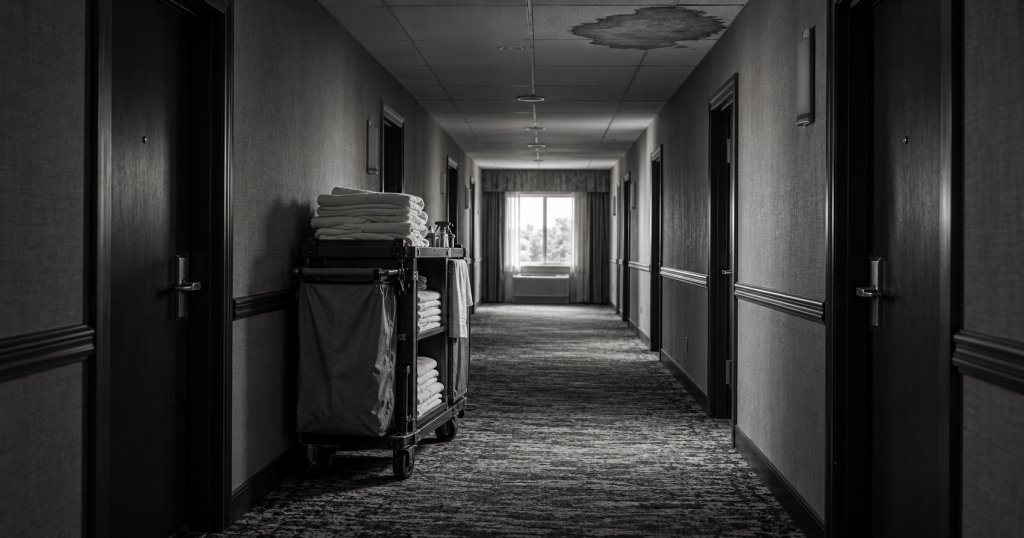
September 27, 2026 · Michael Storm
For nineteen years, Irma called him “boss.”
Not “Mr. Keller.” Not “sir.” Boss… the way you say it to someone you decided a long time ago was worth the word. She’d been a room attendant at that hotel since before he got there (longer than most of the carpet). She knew which rooms caught the afternoon sun and which ones the regulars asked for by number. When something was going wrong in that building that no report would ever show him, Irma was the one who told him, quietly, in the hallway, usually before eight.
Then the contract expired.
I watched this GM go through a contract fight years ago, and I want to be fair to him, because he wasn’t a bad guy. He was doing what everybody tells you to do. Labor counsel sat him down on day one and walked him through what he couldn’t say during bargaining. No promises, no threats, no questions about who was voting how. Good advice. He took it seriously.
So seriously that he stopped saying much of anything.
His morning walk got shorter. Then it got different. He stopped cutting through the housekeeping office. He stopped asking about her grandson’s baseball team. Every conversation felt like it might end up in a grievance, so he stopped having them. And the language changed in his head before it ever changed out loud. It wasn’t Irma and Luis and Marisol anymore. It was “they.” It was “the union.”
About three weeks in, she stopped calling him boss. It was “Mr. Keller” now. I don’t think either one of them could have told you the day it happened.
Then she caught him by the service elevator, the morning after a bad session at the table.
“There’s water in the ceiling above 912,” she said. “It’s been there a week. The work orders keep getting closed.”
He heard the union talking. A setup, maybe. Something for the file.
“Put in another work order, Irma.” And he kept walking.
Two weeks later, on a sold-out citywide, the ceiling in 912 came down. Three rooms out of order for a week. An engineer on overtime four nights running. A group contact moved to a room she didn’t book, on the worst night of the year to be moved.
The contract got signed about six weeks after it expired.
The relationships that were lost in the hallway took two years.
Seven thousand people and one hallway
I thought about Irma this week.
Hotel workers at more than 40 hotels in downtown Chicago and around McCormick Place just voted to authorize a strike. Those hotels employ more than 7,000 room attendants, cooks, dishwashers, front desk agents and servers, and the union says 85 percent voted yes, CBS News Chicago reported. Their contracts expired August 31. UNITE HERE Local 1 hasn’t set a strike date, and one could come at any time. The buildings include properties flying Hyatt, Hilton and Marriott flags. Earlier this month, Hyatt told Axios that wages and benefits would stay unchanged while talks continued, and that it had contingency plans in place.
Chicago has been here before. In 2018, workers at 26 hotels picketed for nearly a month.
I’m not going to tell you who’s right at the table. There are people a lot closer to those numbers than I am, and the table is their job this month.
I’m writing about the other thing. The hallway. Because in some of those buildings, somebody’s morning walk is getting shorter right now.
What actually crossed
In the books I call this an Edge. The gap between what just happened and the next person who walks in. This one is the Person Edge: somebody’s standing right in front of you, and you answer something other than them.
What crossed that gap for Keller was a Picture. That’s a model of a person you built once and stopped updating. Except he built this one fast. In three weeks, nineteen years of Irma got replaced by a picture of “the other side.” So when she walked up with a real problem, he wasn’t looking at her. He was looking at the picture. The question that catches it is simple: am I looking at them, or at the picture?
Now sit in her chair. She’s watching a man she’s called boss for nineteen years walk past her door every morning. Her own picture is forming… management, the company, “they.” And the day he says “put in another work order,” her picture gets confirmed. So she stops telling him things. It’s just arithmetic.
The guest in 912 doesn’t know there’s a contract. The guest just knows the ceiling came down.
The owner sees three rooms out of order and an overtime line. Nobody’s P&L has a row for “the one person who would have warned you stopped warning you.”
The part nobody puts in the budget
Here’s what nobody tells you about a contract fight. The money part ends. It ends on a specific day, with signatures. You can put it in next year’s budget.
The pictures don’t end on a specific day. Both sides walk out of the settlement carrying the version of each other they built during the fight. The GM who went quiet is “management” now. The room attendant who stopped talking is “one of the union people.” And those pictures run the building for years… in who brings problems forward, who covers a callout, who gets the benefit of the doubt on a late morning.
That’s the real bill. It just never shows up on one invoice.
What I’d do this week
If you’re a GM, an HR director, or a department head in one of those buildings (or any union building heading toward a contract), here’s the whole thing in three moves.
Catch it. Listen to your own pronouns. The day someone you’ve known for years becomes “they” in your head, you’re standing at the Edge. You’ll catch it late at first. That’s fine. Late counts.
Check it. Ask the one question. Am I looking at Irma, or at the picture? If the only thing that changed about her in three weeks is that a contract expired, it’s the picture.
Choose it. Keep the hallway exactly the way it was. Same walk. Same time. Same names. Same “how’s the team doing this year.” Let your labor counsel tell you what not to say about the contract, and follow that advice to the letter. Nobody’s going to tell you to stop saying good morning. And when someone walks up with a real problem, treat it like a real problem… because it usually is.
Then tell your department heads the same thing, out loud, this week. They’re watching you to learn what the rules are now.
Here’s the version you can steal: If I notice I’m saying “they” about someone I’ve known for years, I’ll say their name out loud and answer the thing they actually said.
THE 90-SECOND HUDDLE For your next department-head meeting. Read it out loud. Ask the three questions. Don’t answer them for the team.
The moment: During a contract fight, people we’ve worked beside for years start turning into “the other side,” in our heads and in theirs.
What’s something a line employee told you this month that no report would have shown you?
Where have our morning routines changed since the contract talk started, even a little?
What’s one problem someone raised this month that got closed without really getting fixed, and who’s going to go look at it today?
For the leader: If I notice I’m walking a shorter route than I used to, I’ll walk the long one tomorrow.
What it looks like when you get it right
Run it the other way. The fight is loud at the table and quiet in the hallway. The GM walks the same route every morning. Irma still calls him boss (maybe with a little extra on it for a few weeks). She still tells him about the water above 912, and he has an engineer up there before lunch. The contract gets signed whenever it gets signed. And the day after, nobody has to rebuild anything, because nothing in the building got torn down while the table did its work.
And it can be learned. You can learn to see the moment a person turns into a picture… and keep looking at the person.
This is the moment The Next Room is built around. Ray Duarte runs a hotel and goes home to a house, and for most of one year he can’t see the gap between what just happened and the next person who walks in. The book is that year, what it costs the people around him, and what changes when he starts to see it. It comes out September 29, 2026.
New stories every day. Join the reader list and I’ll send them your way.
Sources
“Thousands of downtown Chicago hotel workers vote to authorize strike,” CBS News Chicago, September 22, 2026. https://www.cbsnews.com/chicago/news/downtown-chicago-hotel-workers-strike-authorization-vote-unite-here-local-1/
“Thousands of Chicago hotel workers threaten to strike,” Axios Chicago, September 8, 2026. https://www.axios.com/local/chicago/2026/09/09/chicago-hotel-workers-union-contracts-expire-strike
Put it to work